


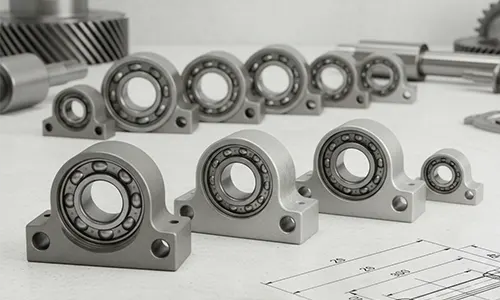
Bearings ruin nights when they fail. Any maintenance engineer who stood on a greasy factory floor at 3 a.m., flashlight trembling, already knows the sinking feeling. The shaft is screaming, vibration rattling the casing, lubrication dripping where it shouldn’t. And someone mutters that the bearings “looked fine last month.” Half the blame usually lands on the wrong choice of pillow block bearings India rather than wear or fate. Buying cheap, or buying without thinking about the job ahead, crushes performance slowly until a breakdown makes headlines inside the plant.
Buying bearings isn’t a transaction. It’s a commitment. Something you feel in your bones after years of breakdowns and replacements and repeat failures. The right bearing disappears into silence. The wrong one screams until everyone hears.
When a Pillow Block Bearing Earns Respect
Some parts get attention only when something goes wrong. Bearings belong to that tribe. Mounted bearings carry rotating shafts, guiding them, holding alignment, and absorbing loads that vary and spike and shift mid-process. Everything depends on friction control and consistent support.
Not glamorous. But ruinous to ignore.
And here’s the kicker: many people think pillow blocks are forgiving. They’re not. Misalignment, contamination, wrong lubrication schedule, wrong seal design—any one of these shortens the useful life dramatically. The right pillow block bearings India tolerate harsh plant conditions: dust clouds in cement plants, moisture from washdown systems, chemical fumes near reactors, unpredictable shock loads on conveyors.
The bearing housing and insert together are the immune system protecting machinery from friction, heat, vibration, and structural fatigue. When one breaks down, other components fall like dominoes.
Choosing Based on Real Duty — Not What the Sales Brochure Says
There’s a wide gap between brochure specs and real operating conditions. Engineers know paper doesn’t run equipment. Bearing life depends on load, speed, environmental exposure, lubrication consistency, temperature swings. Misjudge one parameter and money gets burned silently.
Loads Aren’t Steady
Machines don’t operate at constant loads. Shock loads from starting and stopping, uneven weight distribution on conveyors, vibration from misaligned couplings—all of these forces increase bearing stress beyond the stated “nominal” numbers.
Speeds Fluctuate
Even when machines rotate at the same RPM on paper, grease breakdown happens faster in dusty, hot zones. Bearings that claim high-speed capability may overheat if lubrication isn’t stable.
Shaft Fit Isn’t a Guessing Game
Loose fits, sloppy tolerances, or uneven tightening cause micro-slip. That slip generates friction heat, and heat destroys lubrication. Heat silently kills bearings.
Buyers who rush this detail pay later. Quietly. Expensively.
Material Considerations: The Part No One Thinks About Until Too Late
Cast iron housings crack under sudden impact if the application wasn’t built for it. Ductile iron flexes slightly and survives shock. Stainless housings cost more but resist corrosion where chemicals splash or steam blankets surfaces. Thermoplastic housings shrug off caustic cleaners inside food and chemical processing areas.
Each material choice reflects real environment demands. If corrosion slowly eats away housings, replacing bearings becomes routine. If shock loads push limits, cast housings fracture. And then workers stand around downtime-ridden machinery wondering why replacements don’t last.
Sealing Styles Aren’t All Created Equal
Dust doesn’t need an invitation. It sneaks through weak seals. Once in, friction particles bond with grease and grind surfaces.
Good sealing prevents contaminants from entering and grease from escaping.
Seal types vary: rubber contact seals, grease retainers, labyrinth seals that twist contaminants away. Washdowns and high moisture zones demand strong sealing systems. Dry dusty plants demand labyrinth or double-lip sealing that resists abrasive intrusion. Low moisture indoor conveyors can get away with lighter protection—if they stay dry.
One overlooked seal decision costs more than the price difference between units.
Maintenance: The Uncomfortable Reality Check
Maintenance isn’t optional. Bearings breathe life through lubrication. But lubrication schedules shouldn’t be blind.
Lubricating too often overheats the grease film. Too little and metal contact occurs. Grease type matters. Viscosity matters. Temperature matters. That tiny grease fitting determines bearing fate.
And maintenance time isn’t free. Choosing units that need less frequent regreasing saves man-hours and downtime. Some sealed-for-life bearings exist, but they work only in mild conditions. Buyers picking sealed units for harsh plants often regret those choices later.
Housing Alignment and Mounting Precision
Misalignment destroys bearing life. A misaligned shaft drags unevenly. The load concentrates on a fraction of the rolling elements. At first, sounds subtle. Then suddenly the bearing groans and heat builds.
That’s why self-aligning designs exist: spherical bearing inserts inside housings allow micro-adjustments to compensate for mounting imperfections.
Skipping alignment checks isn’t laziness—it’s a long-term expense disguised as productivity.
Bearing Locking Systems That Hold Grip
Different shaft locking mechanisms exist for real reasons:
- Set screws grip but can deform shafts.
- Eccentric collars provide better resistance to vibration loosening.
- Adapter sleeves improve concentricity for heavy loads.
Machines vibrate. Loads shift. Using the wrong locking mechanism causes creep—shaft rotation inside the inner ring. It starts microscopic and ends catastrophic
Total Cost of Ownership Beats Lowest Price Tag
A plant manager once said: “Nobody remembers how much we saved when parts were cheap. Everyone remembers the downtime.” Cheap bearings become expensive quickly:
- shutdowns
- emergency maintenance
- shaft repairs
- contaminated grease cleanup
- manpower wasted
Good bearings quietly continue operating. They’re invisible because they’re not screaming for attention. They’re the best investment: the one you stop thinking about.
When Bearings Fail in The Real World (And Why Nobody Talks About It)
Every catalog lies in silence. Every glossy PDF shows perfect alignment, perfect grease film, perfect torque load, perfect shaft tolerance. But factories aren’t perfect.
- Bolts loosen.
- Dust sneaks in.
- Operators forget a shift lubrication.
- The motor vibrates more than anyone predicted.
- The shaft runs hotter than intended because the plant cooling system hiccups once.
And BAM—your “long-life bearing” dies at month 3.
So, here’s the practical reality checklist that separates those who keep shafts spinning from those who quietly bleed money.
| Trigger nobody considers | What actually happens on shop floor | Why pillow block bearings die |
| Micro vibrations from misaligned drive | fasteners back off over weeks | bearing movement + inner race stress |
| Dust accumulation behind inaccessible guard | contaminates grease reservoir | lubricant degradation + dry friction |
| Shaft temperature drift | seals harden + shrink | ingress + eventual seizure |
| Grease interval guesswork | over/under lubrication | overheating or erosion |
| Untrained cleaners pressure-wash housing | moisture intrusion | corrosion + premature failure |
| Cheap emergency replacement parts | uneven load balancing | shock fatigue cracks |
Look at that table again. Nothing there is exotic engineering theory.
No fancy equations. Just the mundane killers nobody budgets for. A ₹300 bearing failing takes down a ₹60 lakh setup for 14 hours. Nobody writes that in tender specs. Nobody puts that in vendor brochures. This is where choosing a supplier becomes life or death for uptime.
If the vendor doesn’t ask you uncomfortable questions about environment, lubrication discipline, or shaft engineering tolerances—walk away. They’re selling catalog dreams, not industrial reality.
Final Reality for Buyers
Choosing pillow block bearings India isn’t about availability or price. It’s awareness of environment, load spikes, lubrication strategy, sealing needs, alignment capabilities, and shaft fit precision. A bad choice announces itself through heat, vibration, premature noise, grease leakage, and shaft scoring. A good bearing? Silence. Reliability. Predictable maintenance intervals. Shaft spins, machine pushes production numbers, and the bearing hums unseen. That’s success. A bearing that disappears from discussion—because it simply works.