

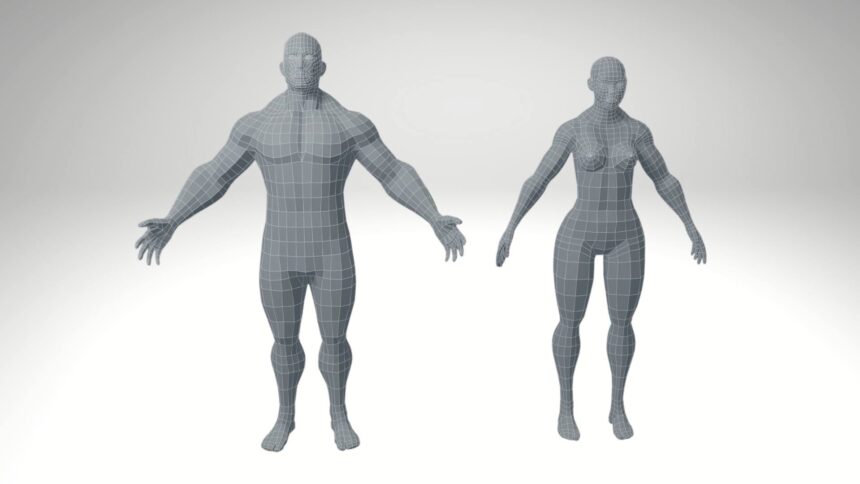
To the marketing and sales teams, the 3D models have become a powerful tool which is transforming the manner of presenting and utilising products. It is possible to bring businesses closer and more understandable by showing goods to interested people with realistic visualisations, which do not involve any physical samples.
Such models provide the opportunity to give presentations in a more immersive way, virtual try-ons, and interactive demonstrations, which minimises the sales cycle and instils greater confidence in a client. Moreover, advertisement campaigns also have the advantage of the dynamic and intriguing aspect of 3D pictures. Organisations that desire to employ this type of technology often require the 3D model designing services to create high-quality visualisations that yield results.
Enhancing Visualisation of Products
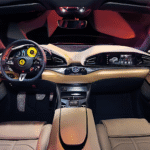
One of the most effective and at the same time simplest uses of the 3D models is product visualisation. Unlike the two-dimensional image, 3D models allow future clients to look at the product from any angle, appreciate certain details, and understand complex design. This type of immersive experience allows clients to evaluate the functionality and look of a product much more easily, and this is particularly useful when it comes to such industries as electronic goods, automotive, and furniture.
Websites or apps provide a chance for marketing departments to display products in high-resolution 3D to enable consumers to interact before deciding on what to purchase. This reduces ambiguity in the process of purchasing and increases interaction.
Internet Interactive Catalogues
Whereas 3D interactive catalogues allow things to come alive, traditional catalogues can only have a flat picture and text. To enable customers to turn, zoom and even personalise products on the fly, the sales teams use the 3D models in online catalogues. In the case of a customer purchasing a car, say, he or she instantly knows the appearance of the car because of altering the colour, wheels or interior fabrics.
This interaction makes customers feel more in charge and personalised, which may significantly boost conversion rates. The marketing teams could also foster better storytelling with interactive 3D presentations, which can be incorporated directly into online advertising.
Online Try-Ons
3D models have changed the consumer experience in fashion, eyewear, and beauty products through the virtual try-on technologies of 3D models. Customers can have a preview of how clothes would fit them, how glasses would appear on their face or how makeup would suit them without physically trying on products.
Marketing teams use these 3D concepts in apps or social media filters so that they can create an engaging and viral experience. The customers feel motivated to complete their purchases since they can envisage themselves using the product, and thus reduce uncertainty and returns, which is beneficial to the sales teams.
Immersive Augmented Reality Experience
Augmented reality (AR) is based on the use of 3D models and has become an essential marketing and sales tool. Augmented reality (AR) allows consumers to insert 3D products into the environment of their home and illustrate how a piece of furniture will look in their living room or how certain equipment will work in a workspace. Besides turning the advertisements into a dynamic process, 3D model-led augmented reality experiences provide valuable data on consumer engagement and preferences.
Online Showrooms
Physical showrooms can be expensive and geographically restrictive for businesses with big or complicated products. Marketing teams can showcase the entire product line online at any time and from any location thanks to digital showrooms that are powered by 3D models. In addition to customising features and simulating usage scenarios, clients can examine every detail.
Being able to reach customers who are unable to visit physical stores, increasing market reach, and cutting expenses are all advantages for sales teams. In the automotive, real estate, and commercial machinery industries, virtual showrooms are particularly well-liked.
Pre-launch Demonstrations and Prototyping
Products can be presented by marketing and sales teams in the form of 3D renderings even before they are actually produced. The prototyping through 3D models enables the clients to view new ideas in a clear-cut way, to edit and be even more assured about the final product. This approach reduces the costly production errors and accelerates the feedback cycles.
By having 3D models to generate anticipation and enthusiasm in the target markets with prior examples, even before a product is released in the market, advertising efforts can gain an advantage over others.
Personalisation and Customisation Tools
Personalised products are increasingly gaining popularity, and with 3D models, they can be customised in real time. Marketing departments can add 3D configurable options to websites or apps, such that users can select features, colours, materials and accessories and view the modification instantly.
These tools are the ones used by sales representatives to provide a personalized experience to the customers, making them feel happier and encouraging them to buy more expensive products. The ability to visualise the customised options helps a lot to bridge the gap between the real and the imagined, and thus, the customer journey is greatly improved.
Final Words
Since the usage of 3D models by marketing and sales departments was a novelty, it has become a necessity. There are truly no limits to what can be done as the possibilities to enhance the visualisation of products and the opportunities to conduct a virtual try-on, create an immersive AR experience, or an interactive catalogue are limitless. By using 3D models in marketing, companies enhance interactions with customers, accelerate the sales processes, and enhance their interactions with them.